Tuesday, September 25, 2018

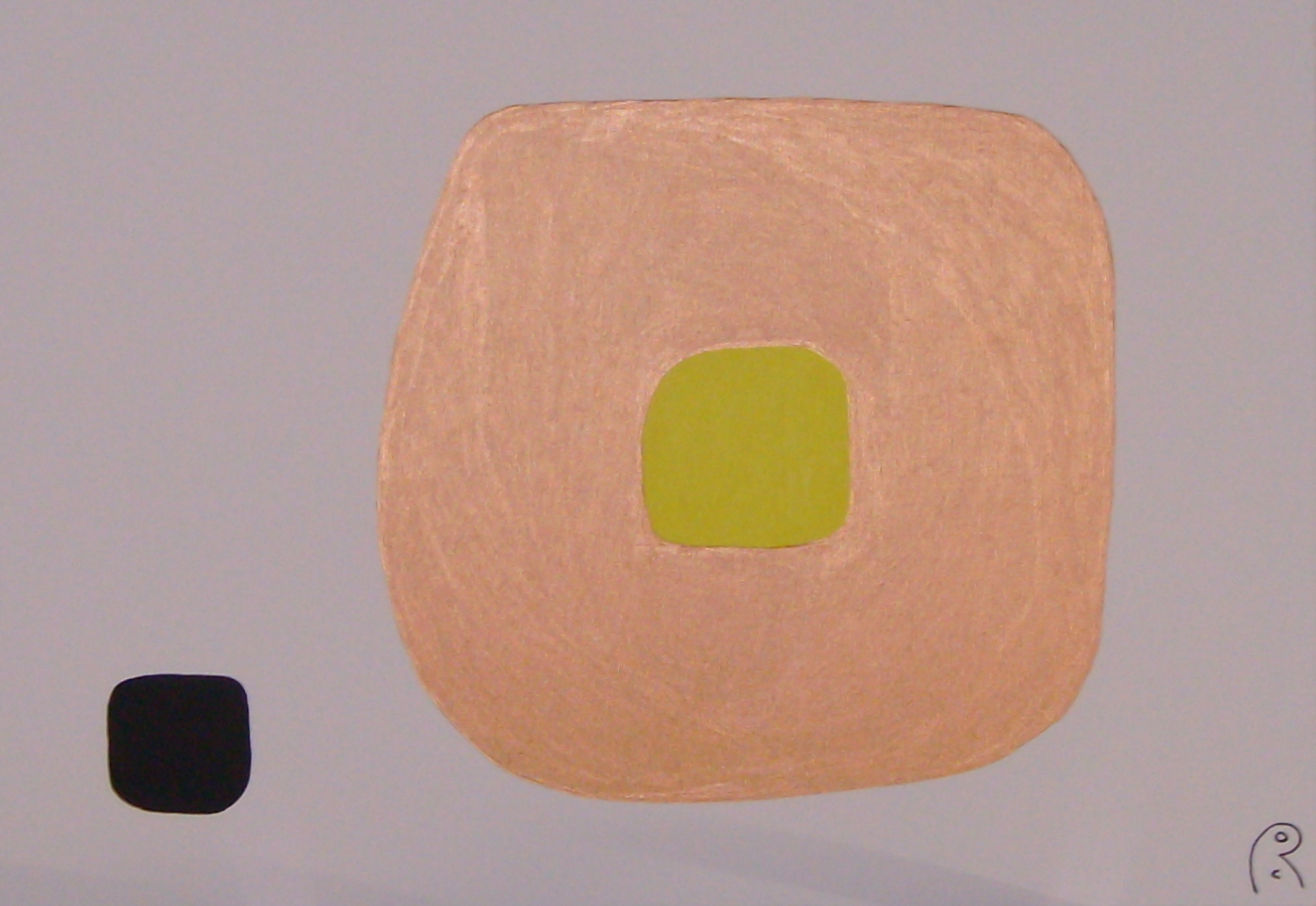
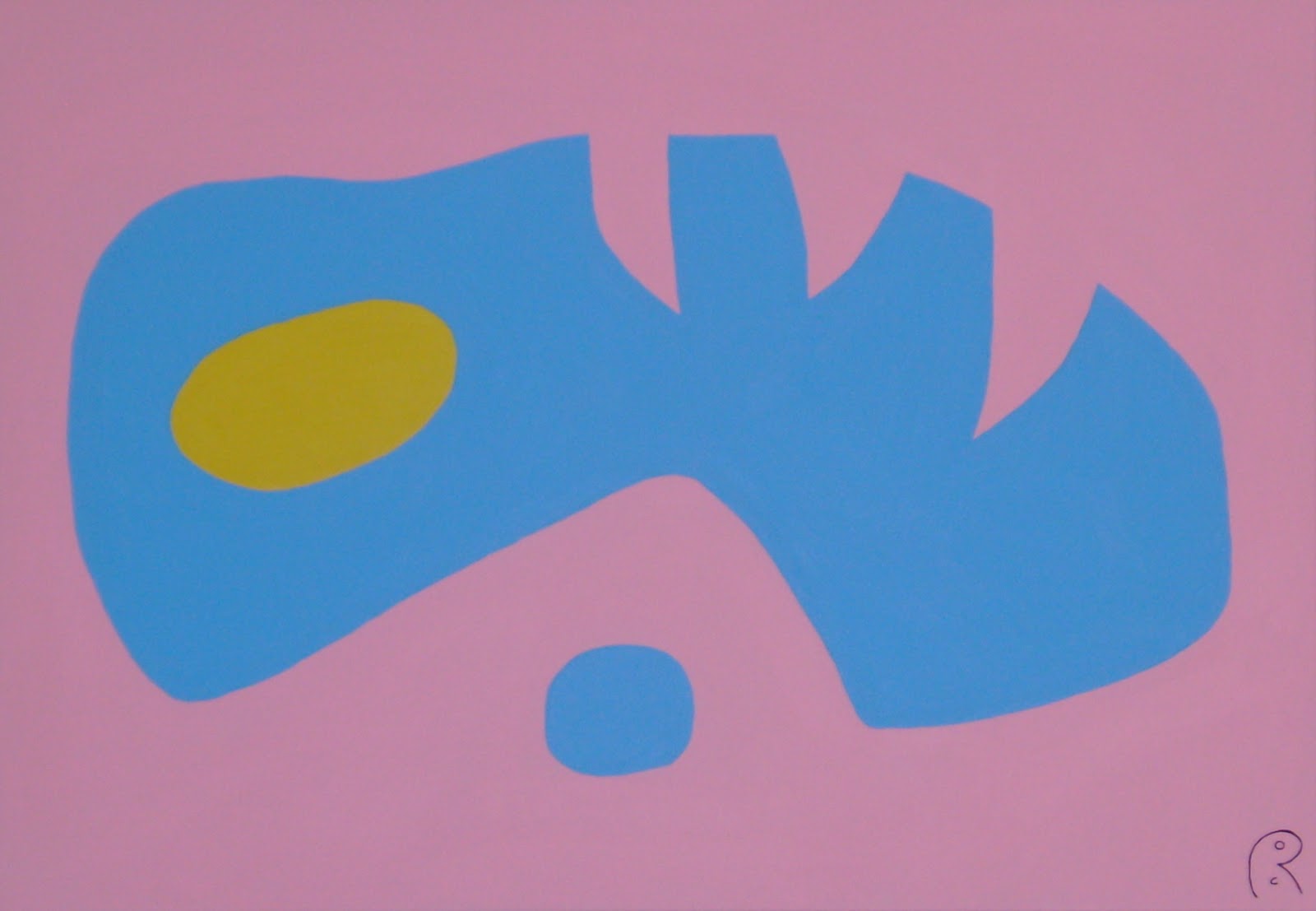
Il progetto nascosto / The hidden project - Jan Theuninck, 2018


different levels, one level hiding another. 

Avidità, odio, brama di potere, crudeltà e la sfrenata tendenza a ferire gli altri: questo è stato nascosto per anni sotto un sottile strato di civiltà


Ronchamp - Jan Theuninck, 2018


Abstract impression of Chapelle Notre-Dame du Haut in Ronchamp, France, designed by Le Corbusier


ヤン・テューニック

Wednesday, August 22, 2018

Brainwashing - Jan Theuninck, 2018


As a kind of psychological octopus, brainwashing isn't some isolated trick; it's this sprawling, insidious beast with tentacles wrapping around history, psychology, politics, and even modern tech, sucking the autonomy out of individuals and societies. It's adaptive, sneaky, and feeds on power dynamics, whether through state-sponsored programs or subtle cultural pressures. Jan Theuninck's 2018 piece "Brainwashing" captures this vibe perfectly. Theuninck is a Belgian abstract painter who's spent decades exploring themes of totalitarianism and societal control in his work. His paintings often depict the erosion of freedom under oppressive systems, and "Brainwashing" specifically seems to evoke the psychological dismantling of the individual in a surveillance-heavy, conformity-driven world. It's like a visual manifesto on how minds get reshaped, fitting right into the octopus metaphor.
Zooming out, brainwashing (or "thought reform," as it's sometimes clinically called) originated in mid-20th-century fears of communist indoctrination during the Cold War. The term gained traction with reports of "brain warfare" tactics used on POWs in Korea and China, where prisoners were subjected to isolation, sleep deprivation, and ideological bombardment to break their will and enforce submission. This ties directly to "communist brain warfare," which wasn't just paranoia, the U.S. even accused communists of germ warfare as a cover, while secretly ramping up their own experiments.One major tentacle is Joost Meerloo's 1956 book The Rape of the Mind, which dissects "menticide" (the killing of the mind) through psychological manipulation. Meerloo, a psychiatrist who survived Nazi occupation, warned about how totalitarian regimes use propaganda, isolation, and fear to erode free thought, forcing people into "thinking correctly" under a single, imposed ideology. It's all about conformity and "single thought"—that hive-mind state where dissent vanishes, and everyone parrots the party line. This echoes William Sargant's work in Battle for the Mind (1957), where he explored how stress, drugs, and suggestion can "convert" people, drawing from psychiatric experiments on breakdown and rebuilding personalities. Sargant saw parallels in religious conversions, political indoctrination, and even psychotherapy gone wrong.
Then there's the experimental research angle, like the CIA's MKUltra program (1953–1973), which was basically the U.S. government's dive into mind control. They dosed unwitting subjects with LSD, hypnosis, and sensory deprivation to see if they could erase memories or program behaviors, straight out of dystopian sci-fi, but real and often unethical. This overlaps with "mindcontrol" as a broader concept, including techniques for inducing submission through repeated trauma or conditioning.Charlotte Iserbyt adds an education-focused tentacle. As a former U.S. Department of Education insider, she blew the whistle in her book The Deliberate Dumbing Down of America (1999), arguing that the school system was engineered for psychological manipulation, pushing conformity over critical thinking to create a compliant workforce. She linked it to behaviorist psychology and globalist agendas, seeing it as a slow-burn form of brainwashing."La culture de l'impuissance" (the culture of impotence or learned helplessness) feels like a French twist on this, possibly nodding to thinkers like Michel Foucault or modern critiques of neoliberalism, where systemic disempowerment makes people feel powerless, reinforcing control without overt force. With  Artifcial Intelligence thrown in, we're looking at contemporary extensions: algorithms on social media that nudge behaviors, echo chambers amplifying single thought, or deepfakes enabling new levels of manipulation. It's like the octopus grew digital arms. This isn't a linear thing; it's a web of interconnected tactics from Stalin's purges to today's info wars.
Brainwashing thrives by exploiting human vulnerabilities like fear of isolation or desire for belonging, and its "tentacles" keep evolving. What fascinates (and alarms) is how it blurs lines between coercion and consent—people often don't realize they're in the grip until it's too late. 


--------------------------------------------------------------------------------------
Brainwashing (or the rape of the mind) is said to reduce its subject’s ability to think critically or independently, to allow the introduction of new, unwanted thoughts and ideas into the subject’s mind, as well as to change his or her attitudes, values, and beliefs.


The Deliberate Dumbing Down of America.
Charlotte Iserbyt served as the head of policy at the Department of Education during the first administration of Ronald Reagan. While working there she discovered a long term strategic plan by the tax exempt foundations to transform America from a nation of rugged individualists and problem solvers to a country of servile, brainwashed minions who simply regurgitate whatever they're told


Genetically engineered 'Magneto' protein remotely controls brain and behaviour
https://www.theguardian.com/science/neurophilosophy/2016/mar/24/magneto-remotely-controls-brain-and-behaviour

--------------------------------------------------------
Charlotte Iserbyt documented how this “deliberate dumbing down” shifted education from academic excellence to job training, using Skinnerian behavioral psychology to create measurable outcomes rather than real understanding. -----------------------------------------------

Tuesday, August 21, 2018

Deep State - Jan Theuninck, 2018


Deep State is a political situation in a country when an internal organ ("deep state"), such as the armed forces or public authorities (intelligence agencies, police, secret police, administrative agencies, and branches of government bureaucracy), does not respond to the civilian political leadership

- les décideurs de l'ombre  -

Where is my kalashnikov ? - Jan Theuninck, 2018


                the moment you let the state define which ideas are "contrary to the principles of democracy and human rights", you have handed the government of the day a weapon that can be pointed at almost anyone it dislikes....


Dream - Jan Theuninck, 2018


I still have a dream, a dream deeply rooted in the American dream – one day this nation will rise up and live up to its creed, "We hold these truths to be self evident: that all men are created equal." I have a dream...
Martin Luther King Jr. (1963)

Monday, July 30, 2018

Saturday, July 21, 2018

Hope - Jan Theuninck, 2018


'hope' is a massive perceptual manipulation technique because it's always in the illusory 'future', never in the NOW Accept shit now in the 'hope' it will get better - on and on it goes. 'Change' is another political version of 'hope'.


Thursday, July 19, 2018

Dalcroze - rhythmic dance - Jan Theuninck, 2018


Dalcroze Eurhythmics, also known as the Dalcroze Method or simply eurhythmics, is one of several developmental approaches including the Kodály Method, Orff Schulwerk and Suzuki Method used to teach music to students. Eurhythmics was developed in the early 20th century by Swiss musician and educator Émile Jaques-Dalcroze. Dalcroze Eurhythmics teaches concepts of rhythm, structure, and musical expression using movement, and is the concept for which Dalcroze is best known. It focuses on allowing the student to gain physical awareness and experience of music through training that takes place through all of the senses, particularly kinesthetic(Wikipedia)
https://en.wikipedia.org/wiki/Dalcroze_Eurhythmics

Saturday, March 17, 2018

Friday, January 5, 2018

Corones - Jan Theuninck, 2018


abstract impression of MMM Corones (Architect Zaha Hadid)
 Messner Mountain Museum Corones, was built on the top of the Kronplatz mountain (Plan de Corones in Ladin and Italian) at an altitude of 2,275 meters above sea level. Opened in July, 2015, the museum, a modern structure designed by renowned British architect Zaha Hadid, has a floor area of 1,000 square meters and features a permanent exhibition dedicated to traditional climbing.

Monday, January 1, 2018

Firminy - Jan Theuninck, 2018


impression of a stair hall at "Unité d'Habitation" (Le Corbusier) in Firminy(France)

https://photos.google.com/album/AF1QipPdYI_FIc4TUzWywpHVGOfpamKlSHA1NahLAYAU


-----------------------------------------------

Koen van den Broek

Firminy, 2022