Sunday, December 13, 2015

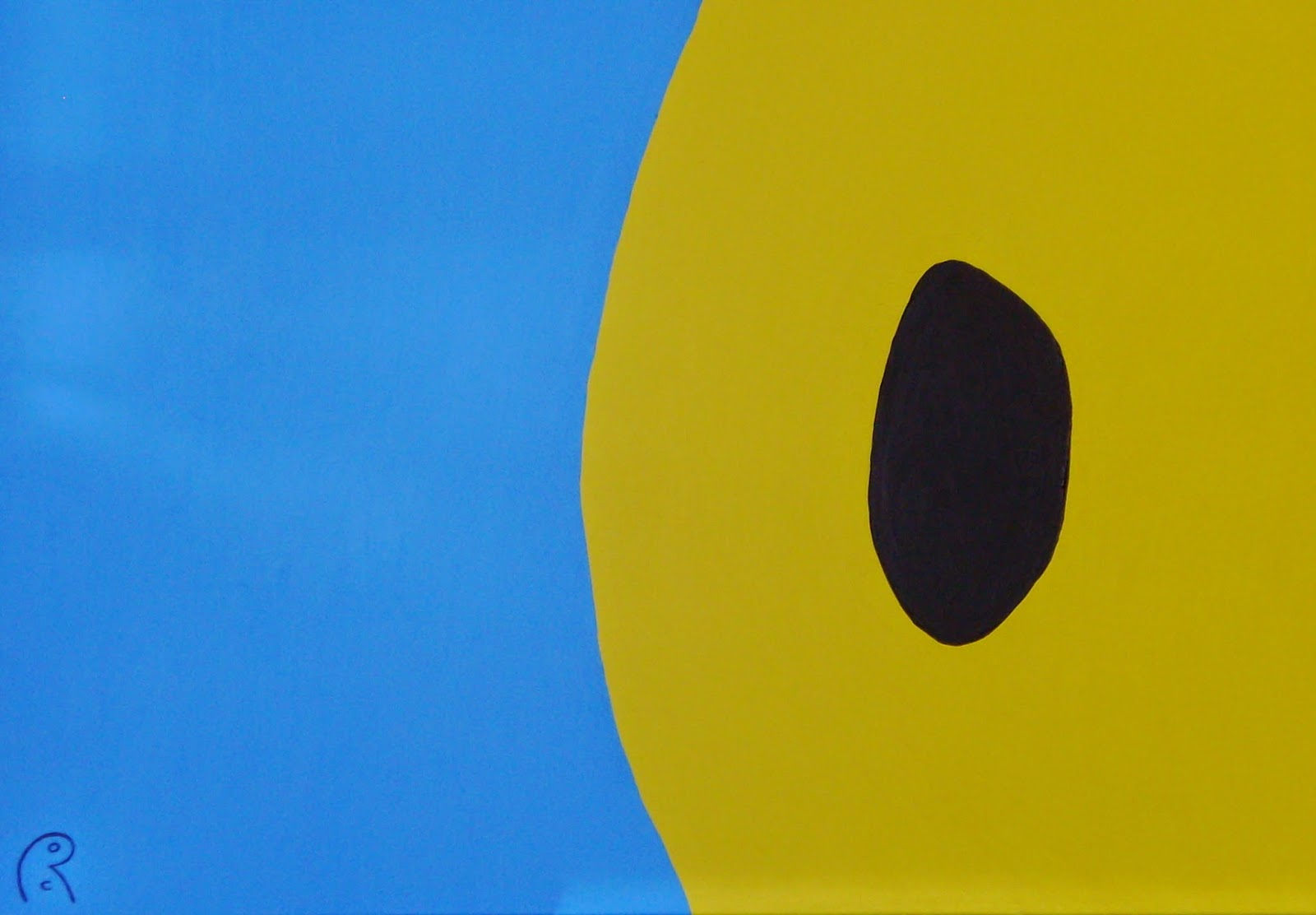
Diplomacy - Jan Theuninck, 2015


the logic of multi-level games

---------------------------------------------------------------------------------
Art's Role in Soft Diplomacy: The Case of Jan Theuninck's Diplomacy and Themes of War, Social Dynamics, and Visual PoetryArt has long served as a subtle yet potent instrument of soft diplomacy, or soft power—a concept popularized by political scientist Joseph Nye, referring to the ability to influence others through attraction and persuasion rather than coercion. In international relations, visual arts like painting transcend linguistic and cultural barriers, fostering empathy, dialogue, and shared human experiences. Contemporary art, in particular, acts as a bridge across divides, promoting economic growth, cultural exchange, and nuanced discussions on global challenges such as conflict and migration. Governments and institutions increasingly invest in art initiatives—think U.S. State Department's Art in Embassies program or international biennials—to build connections and counter hard power narratives. Paintings, with their layered symbolism and emotional resonance, invite viewers to confront uncomfortable truths, making them ideal for "diplomatic" interventions in public discourse.Enter Belgian artist Jan Theuninck (b. 1954), whose abstract paintings and poetry weave social critique into visual poetry, often interrogating the scars of war, colonial legacies, migration, and power structures. Born in Zonnebeke—a village scarred by World War I trenches—Theuninck's work is deeply rooted in pacifism and historical memory. Blending minimalism and monochrome expressionism, he creates "visual poems" that evoke the chaos of human societies without literal representation. His canvases explore social dynamics—the tensions between elites and masses, inclusion and exclusion, tradition and totalitarianism—while echoing the poetic rhythm of his French-language verses. Themes of war recur as metaphors for ongoing global strife, from the Holocaust to modern neocolonialism and AI-driven surveillance.A prime example is Theuninck's 2015 acrylic-on-canvas painting Diplomacy (70 x 100 cm), an embodiment of art's dual-edged role in soft diplomacy. The work subverts the idealism of diplomatic exchange with a cynical edge, captioned by a twist on Carl von Clausewitz's famous dictum: "Diplomacy is the continuation of war by other means", attributed to Zhou Enlai.
Visually, Diplomacy employs Theuninck's signature abstract style:. It's a visual indictment, forcing viewers to question whether "peace processes" merely repackage aggression.
This piece aligns with Theuninck's broader oeuvre on war and social dynamics. Paintings like Yperite (2004), referencing WWI chemical warfare, or Holocaust (2003), pair abstract fury with poetic elegies to memorialize atrocities and warn of repetition ("and now—more than ever—who is next please?"). In Diplomacy, social dynamics emerge through implied hierarchies: the canvas's asymmetry mirrors unequal power in global forums, critiquing how Western totalitarianism evolves from overt colonialism to subtle economic "aid." As visual poetry, it operates like a haiku—economical, evocative—inviting contemplation on migration's plight or pacifism's fragility, much like Picasso's Guernica did for the Spanish Civil War.In soft diplomacy, works like Diplomacy exemplify art's transformative potential. Exhibited in contexts like the G20 Seoul Summit (via Theuninck's West Meets East, 2010), such pieces facilitate cross-cultural reflection, humanizing abstract geopolitics. They don't resolve wars but seed empathy, challenging viewers to reimagine social bonds amid division. Theuninck's art reminds us: true diplomacy isn't about winning arguments but painting paths to mutual understanding—one stroke at a time.
---------------------------------------------------------------------------------
For peace

we have to fight a war
against terror
against psychological terror
against psychopathical leaders
we have to fight a war
— Jan Theuninck

Diplomacy, we can see the world over that this is no easy feat. I am attacted to the magicianship of this visual poetry… how foreground comes forward and recedes into an abyss how a cloud of grey casts two shadows, the undulation of the land and the intensity of the light and colour.  Not many images can be turned any direction and still satisfy.  (Rebecca Guyver in The Postal Ledger, July 14, 2020)
https://thepostalleger.blogspot.com/2020/07/diplomacy.html

This is the second of four videos featuring selected submissions from the Artists For a Better World International 2021 Call for Mail Art.
https://www.youtube.com/watch?v=iavSZD5apbQ  on 0:37

Rafael González

https://www.youtube.com/watch?v=o9tWVdV6bMQ


3 "Diplomacy" stamps realized by Kunstraum Reuter in Berlin - 2023


Homage to Pablo Picasso
Kunstraum Reuter 29 sept. - 11 nov. 2023


Sunday, November 29, 2015

Bataclan - Jan Theuninck, 2015


 acrylic on canvas, 2015, 70 x 100 cm
Ba-Ta-Clan
Bataclan : La commission d’enquête confirme que des actes barbares ont eu lieu à l’intérieur du Bataclan : décapitations, éviscérations, énucléations. Blackout des médias sur ces actes ignobles.
Pas un média français n’en a parlé ! Le blackout sur ces actes ignobles semble avoir été ordonné par l’Elysée au nom du « padamalgame »…
https://www.lemonde.fr/societe/article/2018/06/08/13-novembre-2015-pourquoi-les-militaires-de-sentinelle-ne-sont-pas-intervenus-lors-de-l-attentat-du-bataclan_5311948_3224.html
« Sur les causes de la mort de mon fils A., à l’institut médico-légal de Paris, on m’a dit, et ce avec des réserves compte tenu du choc que cela représentait pour moi à cet instant-là, qu’on lui avait coupé les testicules, qu’on les lui avait mis dans la bouche, et qu’il avait été éventré. Lorsque je l’ai vu derrière une vitre, allongé sur une table, un linceul blanc le recouvrant jusqu’au cou, une psychologue m’accompagnait. Cette dernière m’a dit : ‟La seule partie montrable de votre fils est son profil gauche. » J’ai constaté qu’il n’avait plus d’œil droit. J’en ai fait la remarque ; il m’a été répondu qu’ils lui avaient crevé l’œil et enfoncé la face droite de son visage, d’où des hématomes très importants que nous avons pu tous constater lors de sa mise en bière. »
The progression of recent history clearly shows a dedicated effort to lead the world into unknowingly accepting communitarian solutions.
 Communitarianism is the theory that individual rights must be balanced against the rights of the "community." Its many proponents insist that individual rights and liberties pose a real threat to the health and safety of the "community at large." The founders of the Communitarian Network began "shoring up the moral, social and political environment" in the early 1990s. Today the communitarian theory is the basis for hundreds of new global rules and regulations eliminating individual rights.

Wednesday, November 18, 2015

Self-portrait with heraldic family weapon - Jan Theuninck, 2015


Self-portrait with heraldic family weapon


Het zelfportret van 2015 heb Ik geschilderd in Daler-Rowney acrylverf, het blauw en bruin zijn gemengde kleuren. De zwarte romp is een ontwerp, gebruikt bij het portret van Gilbert & George - ooit een abstracte kop, getekend op computer en het origineel gespiegeld, en pas jaren later, in 2013,  gezien dat het wat had van Gilbert & George toen ik hen laattijdig ontdekte bij de Herbert Foundation aan de Coupure.

Het blauw van het hoofd symboliseert mijn weelderige haardos, een gezicht is er niet vandaar een witte vlek.. Ik pleeg te zeggen dat ik "niets en niemand" ben (zoals mijn familie het wilde), zo heb ik ook jarenlang het Italiaaanse "uomo senza volto" of "man zonder gezicht" als codenaam gebruikt. 

Een wapenschild bij een portret werd vroeger weleens geplaatst bvb bij het portret van Jan Parmentier uit 1627 dat deel uit maakt van de collectie van het Sint-Janshospitaal in Brugge. Mijn heraldisch familiewapen, ook een witte vlek met bruine rand,  is een metafoor verwijzend naar familieverhalen uit het verleden met een existentiële impact op het heden. 

Portretten schilderen is niet mijn specialiteit maar ik heb mijn eigen portret - vanitas vanitatum - wel laten maken door Koen Pattyn in olie op doek, anno 2013, door Sarah Melloul  in acryl op doek, anno 2018 en door Helena Cnockaert in een textielwerk, anno 2019.

Gepubliceerd in Kunstletters, het magazine van Kunstwerkt (met oa Beeld.be) :
juli-sept. nummer 2020


Jan Theuninck was born in Zonnebeke, 7 June 1954. He is a Belgian abstract artist who describes the manipulated life of the multitude. His work is colorful with a touch of minimalism.


జాన్ థెయునింక్    /   چان ثيونينك  /  ヤン・テューニック   /  Ян Тёнинк   /  贾恩·瑟尼克  /  얀 토이닝크  /  

Thursday, November 12, 2015

Corporate Control - Jan Theuninck, 2015


a corporate religion tries to take political and cultural control by creating a parallel system

Corporate Control of Our Democracy


Friday, October 16, 2015

Migration - Jan Theuninck, 2015


Mail Art “BELLEZZA / BEAUTY” - Sala 4 - YouTube

 il segno astratto essenziale di Jan Theuninck
https://www.ilmonferrato.it/notizia/xqhBeygr1UeyLKiOWtnykw/mail-art-al-castello

------------------------------------------------------------------------------------------------


Exiled in my own country, 2010

------------------------------

Innere Emigration


Jan Theuninck's 2010 conceptual artwork
Exiled in my own country (a staged photograph of the artist sitting on the ground, appearing defeated or dead, beside a sign bearing the title) directly evokes and parallels the historical phenomenon of innere Emigration ("inner emigration") during the Nazi era (1933–1945).
Core Thematic Similarity: Internal Exile Without Physical DepartureThe phrase "exiled in my own country" perfectly captures the essence of innere Emigration — a term used to describe German and Austrian intellectuals, writers, and artists who remained physically in the Third Reich but withdrew inwardly. They rejected Nazi ideology, feeling profoundly alienated, silenced, or spiritually banished in their homeland due to censorship, persecution, and a hostile cultural climate.
Theuninck's title and the artwork's title literalize this psychological state. The staged "corpse" symbolizes the living death or total defeat of the self in an excluding society, mirroring how inner emigrants often described feeling like strangers or ghosts in their own land.
Parallel to the Nazi Period (1930s–1940s)Theuninck explicitly links his work to the 1930s, quoting Rabbi Tamarah Benima ("I see exclusion just like in the 30s") and addressing the creation of "internal enemies" through fear, suspicion, and scapegoating of the "other" (including those who are similar or close). This echoes the Nazi tactic of portraying Jews, modern artists, intellectuals, and political dissidents as insidious threats, leading to social exclusion, dehumanization, and worse.
The artwork includes a poem evoking the antisemitic trope of the "man of eternal wandering" (the mythical Wandering Jew), denied tolerance and effectively exiled even at home. The photo "il a fini par sauter..." (at last he jumped..) alludes to despair-driven suicides during the Nazi era. Thus, Theuninck warns of recurring patterns of exclusion in contemporary (2010-era) Europe, using the same language of internal exile.

In summary, Theuninck's 2010 piece is a deliberate, contemporary artistic invocation of innere Emigration, using its defining sentiment — exile without leaving — to critique resurgent exclusionary politics,  embodying the historical suffering of artists who endured the original Nazi version of this internal banishment. The work functions as both memorial and warning.


--------------------------------------------------------------------------------------------------------

at last he jumped, 2010


SON OF THE WIND
 
stranger in your own country
your ugly face is your first crime
man of the eternal wandering
you need some respect !
 
 © by Jan Theuninck


Exclusion   - Jan Theuninck, 2016


Monday, August 31, 2015

ils nous tiennent.. - Jan Theuninck, 2015

https://www.nouvelobs.com/rue89/rue89-medias/20110223.RUE1005/la-diplomatie-francaise-dans-le-piege-de-la-mamounia-marocaine.html


TAIS-TOI !

tu n'as pas le droit
à être toi

tais-toi !
un peu de discipline
et montre ta bonne mine

tais-toi !
le devoir est sacré
faut se voûter et étouffer

tais-toi !
ton unique destin
est de suivre leur chemin

tais-toi !

© by Jan Theuninck

Sunset - Jan Theuninck, 2015


Thursday, July 16, 2015

Freedom of Speech - Jan Theuninck, 2015


Sono ancora sotto choc dopo l'assassinio di Theo Van Gogh nei Paesi Bassi. Quest'assassinio dimostra la precarietà dell'Europa dove la libertà di espressione è sempre più in difficoltà e dove ho constatato, da anni, una crescita di odio ideologico. Coloro che si spartiscono il potere stanno mettendo la popolazione di fronte a un dilemma la cui soluzione sarà disastrosa per ognuno.(Jan Theuninck, 29.11.2004)
https://www.letteratour.it/interviste/H02theunJ01.htm
This assassination demonstrates the precariousness of Europe, where freedom of expression is increasingly under threat and where I have witnessed, for years, a growth in ideological hatred.
(Jan Theuninck, 29.11.2004)


---------------------------------------------------------------------
First they came for the socialists, and I did not speak out—
     Because I was not a socialist.
Then they came for the trade unionists, and I did not speak out—
     Because I was not a trade unionist.
Then they came for the Jews, and I did not speak out—
     Because I was not a Jew.
Then they came for me—and there was no one left to speak for me.
Martin Niemöller

-----------------------------------------------------------

-one even becomes a suspect for not thinking correctly!
(Jan Theuninck as quoted in Letteratour (29 November 2004)

- a speaker of truth has no friends - African proverb
- "The further a society drifts from the truth, the more it will hate those that speak it"(George Orwell)

En France, la criminalisation de la parole publique

Die Einschränkung der Meinungsfreiheit geht immer einher mit politischer Verfolgung, denn nur durch Repression kann durchgesetzt werden, dass bestimmte Meinungen nicht mehr geäußert werden. (Hans-Georg Maaßen, Oct.24, 2025)

 Non sono d’accordo con quello che dici, ma difenderò fino alla morte il tuo diritto a dirlo 

Liberty / Liberté - Jan Theuninck, 2015


Vivre en troupeau en se pensant libres.....

To live in a flock by thinking oneself free ..... Ubi Libertas ibi Patria


Comment instaurer aujourd'hui une dictature d'un type nouveau ?
J'ai pour ce faire dégagé sept pistes : détruire la liberté ; appauvrir la langue ; abolir la vérité ; supprimer l'histoire ; nier la nature ; propager la haine ; aspirer à l'Empire. Chacun de ces temps est composé de moments particuliers.
Pour détruire la liberté, il faut : assurer une surveillance perpétuelle ; ruiner la vie personnelle ; supprimer la solitude ; se réjouir des fêtes obligatoires ; uniformiser l'opinion ; dénoncer le crime par la pensée.
(Michel Onfray, Théorie de la dictature)


«Die Freiheit stirbt zentimeterweise» --  Karl-Hermann Flach.

„Freiheit ist das Recht, anderen zu sagen, was sie nicht hören wollen.“ ―George Orwell


Friday, July 3, 2015

Troika - Jan Theuninck, 2015


The Troika is now focused on Greece but Greece is only a laboratory for change(Jan Theuninck, 03 July 2015)

Sunday, June 7, 2015

Submission / Soumission - Jan Theuninck, 2015


--  la culture de l'enthousiasme moutonnier  --
- the culture of sheep enthusiasm -


Censorship is about submission !!

In de Nazi-periode moesten de vrijheid en uniciteit van het individu plaats maken voor conformisme, dienstbaarheid en ondergeschiktheid.‘De verpulvering van de mens tot een ding was zonder twijfel het grootste drama van de twintigste eeuw. Hiermee werd de Kantiaanse stelling dat we de mens steeds als een doel moeten zien en niet als een middel, brutaal en meedogenloos opzij geschoven. De wreedheden die in de kampen gebeurden waren zo erg dat menige overlevende zich bewust was dat anderen hen niet zouden geloven.
https://www.liberales.be/teksten/2017/12/2/over-kampliteratuur-jacq-vogelaar

Ses multiples contacts internationaux lui ont donné une vision sur la société actuelle qui dépasse la culture d'un enthousiasme moutonnier.(commentaire sur Jan Theuninck)
http://www.alalettre.com/auteurs-contemporains-sz.php


In Islamic cultures, for instance, the community prevails over the individual - Prof. Chantal Mouffe, 4 november 2013


---------------------------------------------------------------------------------
 obliger par tous les moyens la population mondiale à se soumettre au dictat d’intérêts privés sous prétexte de "santé publique" (2021) 
https://cogiito.com/societe/covid-lallemagne-a-trouve-son-edward-snowden/
-------------------------------------------------------------
La pulvérisation de l'homme en une chose est sans doute le plus grand drame du XXIe siècle. Avec cela, la proposition kantienne selon laquelle nous devrions toujours voir l'homme comme une fin et non comme un moyen, a été brutalement et impitoyablement écartée. Soumission, 2015
------------------------------------------------------------------------
Conformity - Jan Theuninck, 2017


----------------------------------------------------------------------------------------------- On Tuesday morning, November 2, 2004 at 8:30 am, 47-year-old filmmaker Theo van Gogh was murdered in the Linnaeusstraat in Amsterdam. He was shot dead with pistol shots, after which his throat was cut with a large knife - on November 29, 2004 I mentioned him in an inteview with Eloise Lonobile for Letteratour:
"I am still in shock after the murder of Theo Van Gogh in the Netherlands. This murder shows the precariousness of Europe where freedom of expression is increasingly in difficulty and where I have seen, for years, a growth of ideological hatred. Those who share power are putting the population in front of a dilemma whose solution will be disastrous for everyone."
Submission by Jan Theuninck, acrylic on canvas, 70 x 100 cm, 2015 (Submission is a 2004 English-language Dutch short drama film produced and directed by Theo van Gogh, and written by Ayaan Hirsi Ali.)