Wednesday, August 10, 2016

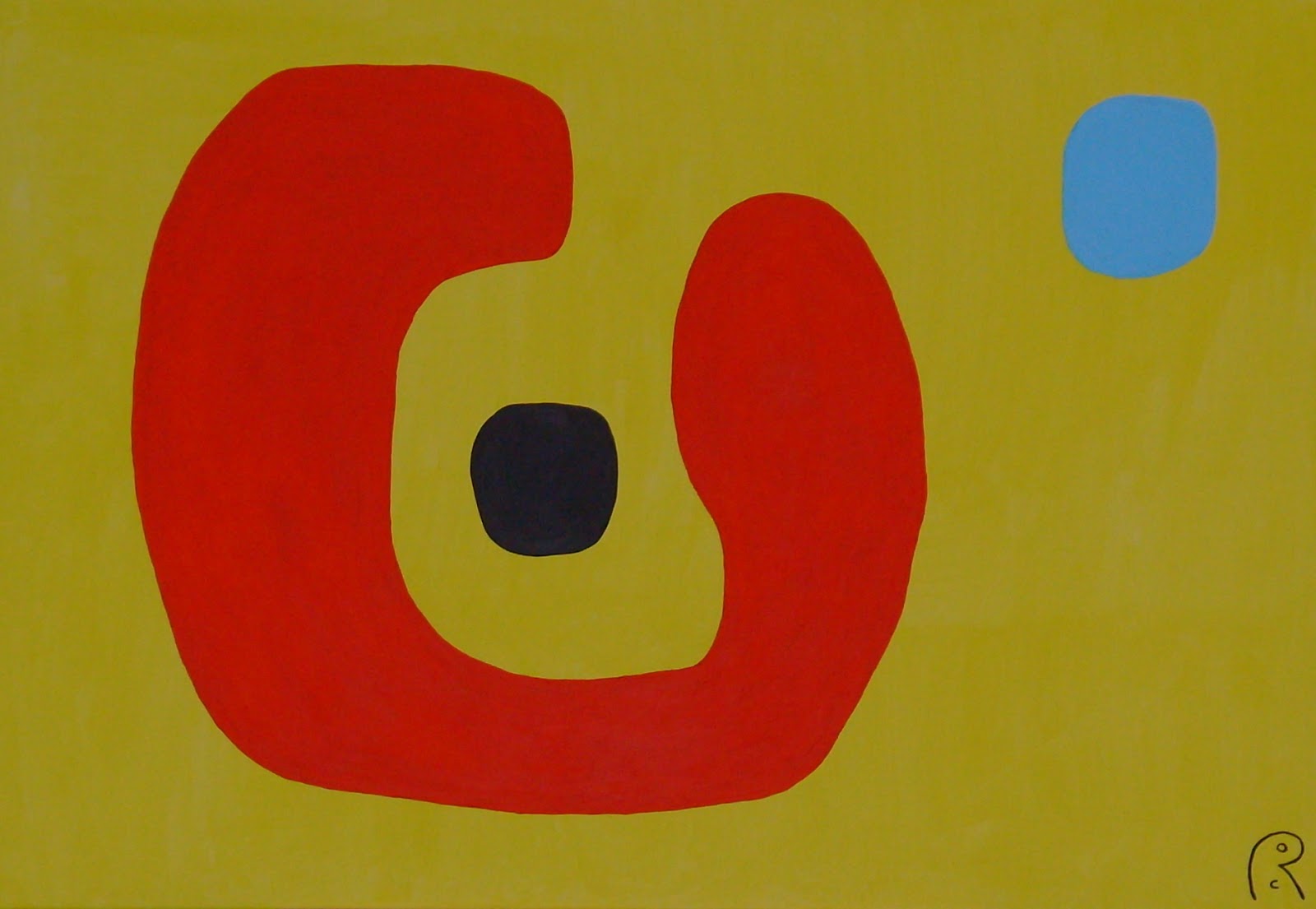
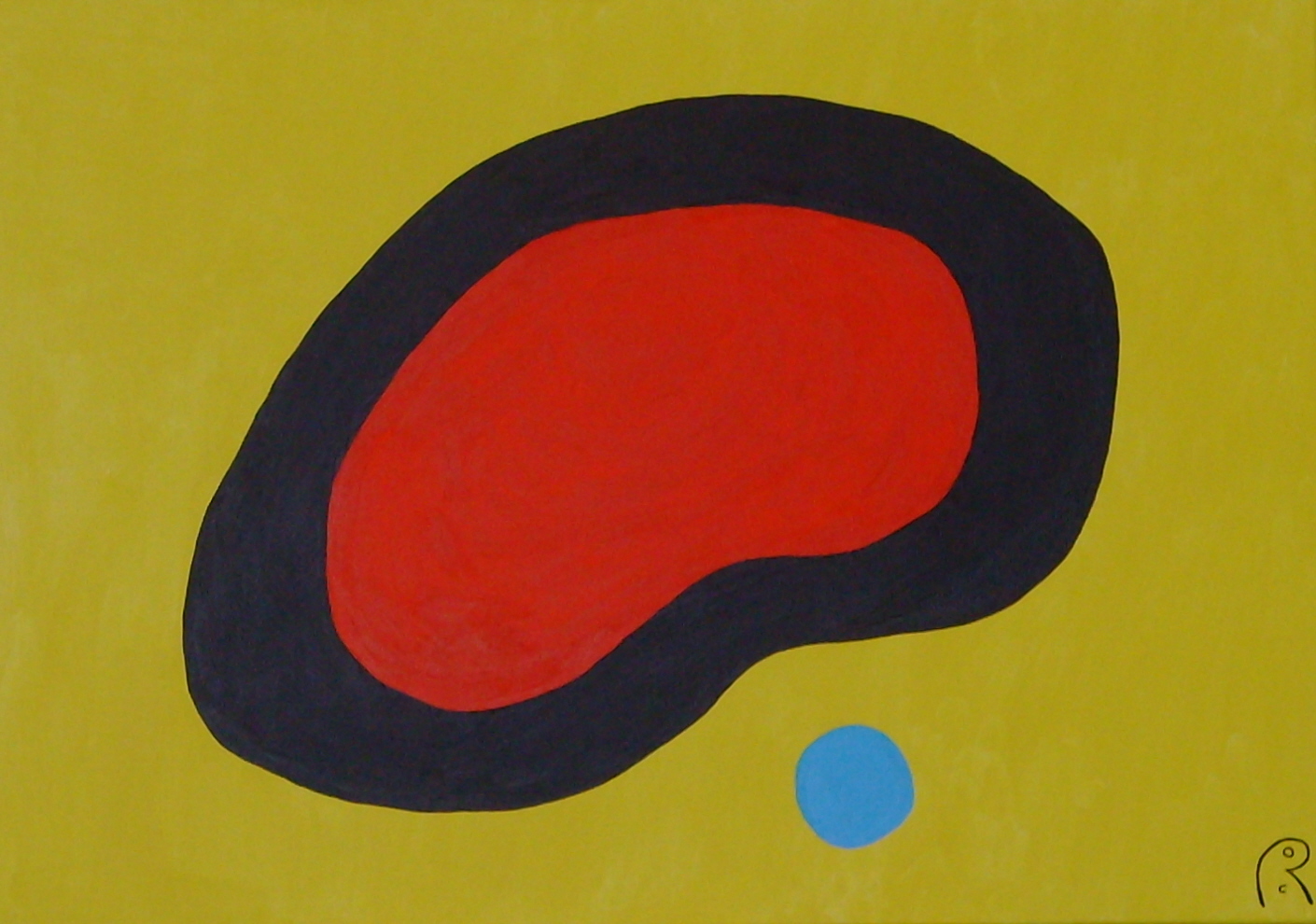
Compassion - Jan Theuninck, 2016 / 慈悲宪章 - 2016


The Antidote: Universal Compassion
To counter the danger of an ethics manufactured by state or political systems, Theuninck points back toward foundational human empathy. As detailed in his piece Compassion, cataloged on Kunstwerkt, he maintains that a healthy moral framework must transcend individual political groups or religious boundaries, prioritizing the baseline dignity of every person over the demands of an abstract system. https://charterforcompassion.org/arts/arts/international-reflective-writing.html/title/belgium

-----------------------------------------------------------------------------------------------

The Charter for Compassion
The principle of compassion lies at the heart of all religious, ethical and spiritual traditions, calling us always to treat all others as we wish to be treated ourselves. Compassion impels us to work tirelessly to alleviate the suffering of our fellow creatures, to dethrone ourselves from the centre of our world and put another there, and to honour the inviolable sanctity of every single human being, treating everybody, without exception, with absolute justice, equity and respect.
It is also necessary in both public and private life to refrain consistently and empathically from inflicting pain. To act or speak violently out of spite, chauvinism, or self-interest, to impoverish, exploit or deny basic rights to anybody, and to incite hatred by denigrating others - even our enemies - is a denial of our common humanity. We acknowledge that we have failed to live compassionately and that some have even increased the sum of human misery in the name of religion.
We therefore call upon all men and women ~ to restore compassion to the centre of morality and religion ~ to return to the ancient principle that any interpretation of scripture that breeds violence, hatred or disdain is illegitimate ~ to ensure that youth are given accurate and respectful information about other traditions, religions and cultures ~ to encourage a positive appreciation of cultural and religious diversity ~ to cultivate an informed empathy with the suffering of all human beings, even those regarded as enemies.
We urgently need to make compassion a clear, luminous and dynamic force in our polarized world. Rooted in a principled determination to transcend selfishness, compassion can break down political, dogmatic, ideological and religious boundaries. Born of our deep interdependence, compassion is essential to human relationships and to a fulfilled humanity. It is the path to enlightenment, and indispensible to the creation of a just economy and a peaceful global compassion.
-------------------------------------

Des usages de la compassion (Le Monde Diplomatique, Décembre 2022)
https://www.monde-diplomatique.fr/2022/12/PIEILLER/65339

--------------------------------------------------------------------------------------------
Overview of the Painting "Compassion""Compassion" is an abstract painting created in 2016 by Belgian artist Jan Theuninck. It measures 70 x 100 cm and is executed in acrylic on canvas. Theuninck, born in 1954 in Zonnebeke, Belgium, is known for his minimalist and monochrome expressionist style, often addressing social and political themes such as pacifism, colonialism, and societal issues. His work draws influences from artists like Ellsworth Kelly and Joan Miró.Visual DescriptionThe painting features a bright yellow background with a central, irregular bean-shaped form outlined in thick black paint and filled with vibrant red. Positioned below and slightly to the right of this shape is a small, solid blue circle, evoking a sense of isolation or punctuation. The overall composition is simple and abstract, potentially symbolizing themes of emotion, suffering, or empathy through bold color contrasts and minimal elements. A small signature appears in the bottom right corner.Connection to the Charter for CompassionThe painting is directly inspired by and dedicated to the Charter for Compassion, an international initiative founded by Karen Armstrong in 2009. The Charter promotes compassion as a core principle across all religious, ethical, and spiritual traditions, urging people to treat others with justice, equity, and respect while working to alleviate suffering. The full text of the Charter, often quoted in descriptions of the painting, emphasizes restoring compassion to the center of morality and rejecting any interpretation of scripture that breeds violence, hatred, or disdain as illegitimate. This ties into the concept of "illegitimate violence," referring to acts or speech driven by spite, chauvinism, self-interest, exploitation, or incitement of hatred, which the Charter denounces as a denial of common humanity.Theuninck's pacifist leanings align with the Charter's call for empathy, cultural appreciation, and transcending boundaries to foster a peaceful global community. The artwork serves as a visual manifesto for these ideas, using abstraction to evoke reflection on human interdependence.


-------------------------------------
https://web.archive.org/web/20230201165556/https://charterforcompassion.org/belgium


Belgium

Monday, July 18, 2016

real security - Jan Theuninck, 2016 真正的安全


security rhetoric under the false flag of an impossible right to security - zero risk doesn't exist !! - Health security rhetoric under the false flag
of an impossible right to health

Health security rhetoric: Le port du masque parasite nos fonctions cognitives à 3 niveaux : l’inconfort physique, l’absence de toutes les expressions qui complètent le verbal et enfin, un rappel constant à la pandémie, au danger, à la maladie, à la crise, aux privations dues à la Covid. C’est dans ce dernier registre que se joue l’affaiblissement de nos fonctions cognitives. Prof. Isabelle Barth(Chercheuse en sciences du Management)

--------------------------------------------------------------------------------

Context: Theuninck describes it as "security rhetoric under the false flag of an impossible right to security—zero risk doesn't exist!!" It critiques how governments or institutions use exaggerated threats to justify invasive policies, eroding freedoms under the guise of protection. This ties into broader anti-authoritarian motifs in his portfolio.
------------------------------------------------------------------------------------------------------


Nos preocupamos por su seguridad

La "religion" sécuritaire

----------------------------------------------------------------------------------------------------------

Building the Permanent Security State

Alongside invasions, aerial bombing and drone attacks of eight Muslim nations since 9/11, the US, UK, and EU promulgated many new laws allegedly to fight the manufactured enemy of al-Qaeda in the homelands. The USA PATRIOT Act passed the US Senate with 98 votes for and one against six weeks after 9/11. It granted sweeping surveillance powers, legalised the indefinite detention of non-citizens, and reduced judicial oversight of government spying on citizens, and arbitrary arrests. Its provisions were subsequently renewed and remain in place. The US also created dozens of new security agencies after 9/11 including the Department of Homeland Security and NCTC.

Britain’s Anti-terrorism, Crime and Security Act 2001, rushed through the Westminster Parliament within weeks of 9/11, allowed the Home Secretary to detain foreign terror suspects indefinitely without charge or trial. This involved suspension of habeas corpus – the legal requirement that a person arrested for an alleged crime is brought bodily before a court within 24 hours of incarceration – which English law traces back to Magna Carta. Under the Anti-Terrorism act, sixteen men were held without trial at HMP Belmarsh, some for close to three years, before the House of Lords ruled in December 2004 that the power was unlawful, not because the emergency was unjustified, but because the power applied only to foreigners. Lord Hoffmann’s dissent went further: ‘the real threat to the life of the nation… comes not from terrorism but from laws such as these.’  Parliament’s response was not to relinquish the power but to extend it to British citizens as well, through a ‘control-order’ regime a High Court judge later called ‘an affront to justice.’ 

Agencies charged with administering the war on terror and the surveillance state have grown significantly since 9/11 in the UK as well as the US and other western "democracies". In the UK MI5 records show the Service doubling in manpower from roughly 2,000 in 2001 to around 4,000 today . Counter-terrorism now consumes two-thirds of MI5 activities, a growth the Service attributes to 9/11, and the 2005 London bombings...  

https://propagandainfocus.com/weaponising-religion-9-11-the-war-on-terror-and-the-permanent-security-state/?utm_source=newsletter&utm_medium=email&utm_term=2026-09-12&utm_campaign=Propaganda+In+Focus+Newsletter

---------------------------------------------------------------------------------------------

Jan Theuninck is a Belgian abstract painter and poet (born June 7, 1954, in Zonnebeke, Belgium) known for his conceptual, politically charged works that critique societal issues, totalitarianism, ideology, and perceived manipulations of truth. His art often explores themes of power, propaganda, and human rights through minimalist, symbolic styles—typically acrylic on canvas, emphasizing stark contrasts, text overlays, and evocative titles. Theuninck's pieces draw from historical events (e.g., the Holocaust, Hiroshima) and contemporary controversies, blending visual art with commentary on freedom, censorship, and collective delusion. He describes his process as "live autopsies" of society, not nostalgic reflections, and his bio on platforms like X (formerly Twitter) highlights a pursuit of "lost truth" while opposing "thought prohibitions."

---------------------------------------------------------------------------------------------


Wednesday, June 22, 2016

refugee - Jan Theuninck, 2016


The UN Refugee Agency

The United Nations' World Refugee Day is observed on June 20 each year. This event honors the courage, strength and determination of women, men and children who are forced to flee their homeland under threat of persecution, conflict and violence
https://www.un.org/en/events/refugeeday/


Saturday, April 9, 2016

Glasnost / Гласность / Transparency - Jan Theuninck, 2016


Glasnost means to make the country's management transparent and open to debate…
 but it is not compatible with official blackmail practices
Гласность:  максимальной открытости в деятельности государственных учреждений и свободы информации. (Википедия)


We defeated the Soviets, meanwhile a Stasi culture engulfs Europe... (Jan Theuninck, August 2009)

Our past is your future / Notre passé est votre futur(Vladimir Boukovski):
https://www.youtube.com/watch?v=bM2Ql3wOGcU

Glasnost in 2021 
https://www.youtube.com/watch?v=lEkvD5To02U

https://arnolfini-mma.blogspot.com/2025/06/no71-jan-theuninck-b.html


Saturday, April 2, 2016

Change - Jan Theuninck, 2016


Tout changer pour que rien ne change!

Change everything so that nothing changes
Cambiare tutto affinché nulla cambi...
Alles ändern so das nichts ändert ...
-----


....afin de satisfaire le désir de rupture partagé par de larges secteurs de la société mais sans remettre en question le statu quo.....(Raffaele Laudani, professeur d'histoire de la pensée politique à l'université de Bologne)


...to satisfy the desire to change shared by large sectors of society but without questioning the status quo ..... (Raffaele Laudani, professor of history of political thought at the University of Bologna)

an inconvenient truth….

------------------------------------------------------------------------------------------


The phrase “tout changer pour que rien ne change” (change everything so that nothing changes) is the classic formulation from Giuseppe Tomasi di Lampedusa’s Il Gattopardo (The Leopard, 1958). It describes adaptive conservation—altering forms, personnel, rhetoric, or institutions just enough to preserve the underlying distribution of power, privilege, and structure.
Jan Theuninck (Belgian abstract painter and poet, b. 1954) works in a hard-edge/minimalist-to-monochrome style influenced by Ellsworth Kelly and Miró. His paintings and poetry are politically engaged: colonialism and its afterlives, the Holocaust, pacifism, conformity, brainwashing, surveillance, post-truth dynamics, and the hypocrisies of systems that outrun their own stated principles. Titles and themes such as Metamorphosis, Brainwashing, Post-truth society, Sustainable Dictatorship, and critiques of “New World Order”/communitarian management fit the motif of apparent transformation that leaves core relations intact. The subtitle on a work called “Change” aligns with his broader focus on how language and spectacle of reform can mask continuity.

“Change” functions as a floating signifier that can signal hope, rupture, or merely managerial recalibration. The same pattern appears elsewhere: crisis rhetoric that produces more of the same governance logic under new branding.
True metamorphosis (in the biological or Kafkaesque sense) is irreversible qualitative transformation, not cosmetic redesign. Much of what passes for “systemic reform” is closer to homeostasis: adjust variables so the system’s attractors remain stable. “Positive zeroes” evokes the illusion of net progress that registers as zero substantive shift—metrics improve on selected axes while underlying asymmetries or extractive logics persist. Philosophy of history and political thought have long tracked this: from Marxist analyses of bourgeois revolution as formal equality masking class power, through elite theories of circulation, to contemporary critiques of technocratic or “Third Way” governance that neutralize radical potential by absorbing it: Theuninck’s abstract visual language can be read as an attempt to make that continuity visible rather than narratively smoothed over.
The observation is sharp and diagnostic. Political language of “change,” “reform,” “reset,” or “metamorphosis” is routinely co-opted into adaptive preservation. Genuine structural shifts are rarer and usually require either sustained destituent pressure (mass withdrawal of legitimacy, parallel institutions, refusal) or exogenous shocks that elites cannot fully absorb. Superficial metamorphosis is the default of complex systems under stress; it explains why successive “transformative” moments often leave the same concentration of power, the same incentive structures, and the same patterns of exclusion intact—only better branded. That does not make every reform cynical or every call for change fraudulent. Incremental adjustments can matter, and destituent energy can open space for something different. But the historical and philosophical pattern Theuninck’s subtitle evokes, and that Laudani helps theorize, is real: the most effective way for an order to survive is often to appear to reinvent itself. Recognizing the difference between genuine rupture and managed continuity remains one of the central tasks of political judgment. (Raffaele Laudani is Professor of the History of Political Thought at the University of Bologna - Theuninck quotes or refers to the work and analyses of Laudani in the context of his own artworks.)


Friday, February 19, 2016

Emotion - Jan Theuninck, 2016


la stratégie de l'émotion ou la culture avilissante de l'émotion, de l'émotion imposée  à travers les réseaux sociaux
-------------------------------------------------------------------------------
Si les émotions, positives ou négatives, enrichissent l’existence, cette forme d’expression peut poser de redoutables défis à la démocratie lorsqu’elle se fait envahissante et tend à remplacer l’analyse. La classe dirigeante s'en servirait pour dépolitiser les débats et pour maintenir les citoyens dans la position d'enfants dominés par leurs affects.
(Anne-Cécile Robert)
http://www.monde-diplomatique.fr/2016/02/ROBERT/54709

Gouvernance par les algorithmes de reconaissance des émotions !!!


No73. Jan Theuninck (B) | Arnolfini Mini[e]MailArt


Power - Jan Theuninck, 2016


from obsession to paranoia, 

IT'S ALL ABOUT POWER....

relationship between power and knowledge

ze slaan eerst op jouw gezicht en dan zeggen ze dat je zelf begonnen bent...
they hit your face first and then they say you started yourself .
Un Etat qui veut se passer de la justice, un système parallèle déjà en place?(Marc Trévidic, ancien juge antiterroriste)

de l'obsession à la paranoïa…glisser tacitement du conditionnel à l'indicatif


biopower / control of populations


Shut up !


don't try to be

who you are


shut up !


some more discipline

and a cheerful face


shut up !


your duty is sacred

work yourself to death


shut up !


your only way

is  "their" way


shut up !


© by Jan Theuninck


“We will not be silent. We are your bad conscience," wrote members of the White Rose student resistance group

Heren van Macht
 
machtssysteem zonder moraal
zonder respect voor de burgers
zelfgenoegzaam benedenmaats
weten zij  zonder geweten
hoe anderen vernederen
machthebbers groot maakt
 
© by Jan Theuninck

Is it in the very essence of truth to be impotent and in the very essence of power to be deceitful? (Arendt)


Thursday, February 4, 2016

Manipulation - Jan Theuninck, 2016


“La manipulation des élites est encore plus facile que celle des masses.” [Jean Yanne]
"The manipulation of the elites is even easier than that of the masses." [Jean Yanne]

Les dix stratégies de la manipulation

1/ La stratégie de la distraction
Élément primordial du contrôle social, la stratégie de la diversion consiste à détourner l’attention du public des problèmes importants et des mutations décidées par les élites politiques et économiques, grâce à un déluge continuel de distractions et d’informations insignifiantes. La stratégie de la diversion est également indispensable pour empêcher le public de s’intéresser aux connaissances essentielles, dans les domaines de la science, de l’économie, de la psychologie, de la neurobiologie, et de la cybernétique. « Garder l’attention du public distraite, loin des véritables problèmes sociaux, captivée par des sujets sans importance réelle. Garder le public occupé, occupé, occupé, sans aucun temps pour penser; de retour à la ferme avec les autres animaux. » Extrait de « Armes silencieuses pour guerres tranquilles »
2/ Créer des problèmes, puis offrir des solutions
Cette méthode est aussi appelée « problème-réaction-solution ». On crée d’abord un problème, une « situation » prévue pour susciter une certaine réaction du public, afin que celui-ci soit lui-même demandeur des mesures qu’on souhaite lui faire accepter. Par exemple: laisser se développer la violence urbaine, ou organiser des attentats sanglants, afin que le public soit demandeur de lois sécuritaires au détriment de la liberté. Ou encore : créer une crise économique pour faire accepter comme un mal nécessaire le recul des droits sociaux et le démantèlement des services publics.
3/ La stratégie de la dégradation
Pour faire accepter une mesure inacceptable, il suffit de l’appliquer progressivement, en « dégradé », sur une durée de 10 ans. C’est de cette façon que des conditions socio-économiques radicalement nouvelles (néolibéralisme) ont été imposées durant les années 1980 à 1990. Chômage massif, précarité, flexibilité, délocalisations, salaires n’assurant plus un revenu décent, autant de changements qui auraient provoqué une révolution s’ils avaient été appliqués brutalement.
4/ La stratégie du différé
Une autre façon de faire accepter une décision impopulaire est de la présenter comme « douloureuse mais nécessaire », en obtenant l’accord du public dans le présent pour une application dans le futur. Il est toujours plus facile d’accepter un sacrifice futur qu’un sacrifice immédiat. D’abord parce que l’effort n’est pas à fournir tout de suite. Ensuite parce que le public a toujours tendance à espérer naïvement que « tout ira mieux demain » et que le sacrifice demandé pourra être évité. Enfin, cela laisse du temps au public pour s’habituer à l’idée du changement et l’accepter avec résignation lorsque le moment sera venu.
5/ S’adresser au public comme à des enfants en bas-âge
La plupart des publicités destinées au grand-public utilisent un discours, des arguments, des personnages, et un ton particulièrement infantilisants, souvent proche du débilitant, comme si le spectateur était un enfant en bas-âge ou un handicapé mental. Plus on cherchera à tromper le spectateur, plus on adoptera un ton infantilisant. Pourquoi ? «Si on s’adresse à une personne comme si elle était âgée de 12 ans, alors, en raison de la suggestibilité, elle aura, avec une certaine probabilité, une réponse ou une réaction aussi dénuée de sens critique que celle d’une personne de 12 ans». Extrait de «Armes silencieuses pour guerres tranquilles»
6/ Faire appel à l’émotionnel plutôt qu’à la réflexion
Faire appel à l’émotionnel est une technique classique pour court-circuiter l’analyse rationnelle, et donc le sens critique des individus. De plus, l’utilisation du registre émotionnel permet d’ouvrir la porte d’accès à l’inconscient pour y implanter des idées, des désirs, des peurs, des pulsions, ou des comportements…
7/ Maintenir le public dans l’ignorance et la bêtise
Faire en sorte que le public soit incapable de comprendre les technologies et les méthodes utilisées pour son contrôle et son esclavage. « La qualité de l’éducation donnée aux classes inférieures doit être la plus pauvre, de telle sorte que le fossé de l’ignorance qui isole les classes inférieures des classes supérieures soit et demeure incompréhensible par les classes inférieures. Extrait de « Armes silencieuses pour guerres tranquilles »
8/ Encourager le public à se complaire dans la médiocrité
Encourager le public à trouver « cool » le fait d’être bête, vulgaire, et inculte…
9/ Remplacer la révolte par la culpabilité
Faire croire à l’individu qu’il est seul responsable de son malheur, à cause de l’insuffisance de son intelligence, de ses capacités, ou de ses efforts. Ainsi, au lieu de se révolter contre le système économique, l’individu s’auto-dévalue et culpabilise, ce qui engendre un état dépressif dont l’un des effets est l’inhibition de l’action. Et sa Et sans action, pas de révolution!…
10/ Connaître les individus mieux qu’ils ne se connaissent eux-mêmes
Au cours des 50 dernières années, les progrès fulgurants de la science ont creusé un fossé croissant entre les connaissances du public et celles détenues et utilisées par les élites dirigeantes. Grâce à la biologie, la neurobiologie, et la psychologie appliquée, le « système » est parvenu à une connaissance avancée de l’être humain, à la fois physiquement et psychologiquement. Le système en est arrivé à mieux connaître l’individu moyen que celui-ci ne se connaît lui-même. Cela signifie que dans la majorité des cas, le système détient un plus grand contrôle et un plus grand pouvoir sur les individus que les individus eux-mêmes.


--------------------------------------------------------------------
L'expérience la plus puissante sur l'esprit humain : La boîte Skinner. C'est la véritable cause de l'anxiété et de la dépression chez 97 % des gens.
https://x.com/dr_sante_france/status/1957841776024170821