
Wednesday, May 17, 2017
per vaginam - Jan Theuninck, 2017

per ecclesiam, per vaginam aut per intelligentiam.....
https://nomada.gt/blogs/una-vagina-nos-enfrenta-de-nuevo-a-la-realidad/
Wednesday, April 12, 2017
Binary Pawns - Jan Theuninck, 2017

Peones binarios / Pions binaires / Двоичные пешки / binaire pionnen
Friday, March 31, 2017

Thursday, March 23, 2017
Polarisation - Jan Theuninck, 2017

the counter-revolution is fed by the polarisation of internal politics, the antagonism replacing the compromis
--------------------------------------------------------------------------------
All Neighborhood Plans include a vision for building the character of the neighborhood, and encourage the local participants to identify the types of businesses, people, and behaviors that interfere with their vision. Some Neighborhood Plans include new enforcement procedures that help the community create and build a safer civil society. These plans identify the particular problem people who spread disease, crime, and immorality.!! -->
To rectify identified problems, FBI-COPS created Neighborhood Action Teams, NATS --> program called Weed & Seed identifies the bad weeds and replaces them with good seeds !!
Polarisation = The seeds against the weeds cfr Nazi-Germany
http://www.citizenreviewonline.org/sept_2001/the_third_way.htm
Sunday, February 12, 2017
Kryptonite - Jan Theuninck, 2017

Red kryptonite simply weakened Superman, but to a greater degree
Blue kryptonite is the antidote to the random and bizarre effects of Red kryptonite.
Black kryptonite can split a Kryptonian into two separate entities: one good and the other evil.
Blue kryptonite is the antidote to the random and bizarre effects of Red kryptonite.
Black kryptonite can split a Kryptonian into two separate entities: one good and the other evil.
Wednesday, February 1, 2017
Momentum - Jan Theuninck, 2017

institutional momentum
Het momentum is de sociale dynamiek rond een beslissend ogenblik. Het duidt op het kantelpunt waarop een evenwichtssituatie kan omslaan. Het is een kortstondig drempelmoment van instabiliteit dat betrekking kan hebben op een omslag in een maatschappelijke, bestuurlijke of politieke ontwikkeling.
Thursday, January 19, 2017
Fake News / Fake World - Jan Theuninck, 2017

acrylic on canvas, 70 x 100 cm, 2017
JOHN F. KENNEDY APRIL 27 , 1961 SPEECH
The very word "secrecy" is repugnant in a free and open society; and we are as a people inherently and historically opposed to secret societies, to secret oaths and to secret proceedings. We decided long ago that the dangers of excessive and unwarranted concealment of pertinent facts far outweighed the dangers which are cited to justify it. Even today, there is little value in opposing the threat of a closed society by imitating its arbitrary restrictions. Even today, there is little value in insuring the survival of our nation if our traditions do not survive with it. And there is very grave danger that an announced need for increased security will be seized upon by those anxious to expand its meaning to the very limits of official censorship and concealment. That I do not intend to permit to the extent that it is in my control. And no official of my Administration, whether his rank is high or low, civilian or military, should interpret my words here tonight as an excuse to censor the news, to stifle dissent, to cover up our mistakes or to withhold from the press and the public the facts they deserve to know. * We are opposed around the world by a monolithic and ruthless conspiracy. That relies on primarily on covet means for expanding its fear of influence. On infiltration instead of invasion. On subversion instead of elections. On intimidation instead of free choice, on guerillas by night instead of armies by day. It is a system which has conscripted, vast human and material resources into the building of a tightly nit highly efficient machine that combines military, diplomatic, intelligence, economic, scientific, and political operations. Its preparations are concealed, not published. Its mistakes are buried, not headlined. Its dissenters are silenced not praised. No expenditure is questioned, no rumor is printed, no secret is revealed. * It requires a change in outlook, a change in tactics, a change in missions--by the government, by the people, by every businessman or labor leader, and by every newspaper. For we are opposed around the world by a monolithic and ruthless conspiracy that relies primarily on covert means for expanding its sphere of influence--on infiltration instead of invasion, on subversion instead of elections, on intimidation instead of free choice, on guerrillas by night instead of armies by day. It is a system which has conscripted vast human and material resources into the building of a tightly knit, highly efficient machine that combines military, diplomatic, intelligence, economic, scientific and political operations. * Its preparations are concealed, not published. Its mistakes are buried, not headlined. Its dissenters are silenced, not praised. No expenditure is questioned, no rumor is printed, no secret is revealed. It conducts the Cold War, in short, with a war-time discipline no democracy would ever hope or wish to match. * Nevertheless, every democracy recognizes the necessary restraints of national security--and the question remains whether those restraints need to be more strictly observed if we are to oppose this kind of attack as well as outright invasion. * And so it is to the printing press--to the recorder of man's deeds, the keeper of his conscience, the courier of his news--that we look for strength and assistance, confident that with your help man will be what he was born to be: free and independent.
John F.Kennedy
https://www.youtube.com/watch?v=8Jb8KqaerhQ
Le déni de la réalité est devenu le cadre de vie de nos dirigeants (Jan Theuninck, 17.01.2017)
Europarat-Chef warnt vor staatlicher Zensur:
Im Kampf gegen Fake News hat der Generalsekretär des Europarats vor zu großem Aktionismus gewarnt. Es bestehe die Gefahr, unliebsame Meinungen verbieten zu können.
https://www.faz.net/aktuell/politik/europarat-chef-warnt-vor-staatlichen-massnahmen-gegen-fake-news-14684961.html
Politik mit der Macht der Bilder
The very word "secrecy" is repugnant in a free and open society; and we are as a people inherently and historically opposed to secret societies, to secret oaths and to secret proceedings. We decided long ago that the dangers of excessive and unwarranted concealment of pertinent facts far outweighed the dangers which are cited to justify it. Even today, there is little value in opposing the threat of a closed society by imitating its arbitrary restrictions. Even today, there is little value in insuring the survival of our nation if our traditions do not survive with it. And there is very grave danger that an announced need for increased security will be seized upon by those anxious to expand its meaning to the very limits of official censorship and concealment. That I do not intend to permit to the extent that it is in my control. And no official of my Administration, whether his rank is high or low, civilian or military, should interpret my words here tonight as an excuse to censor the news, to stifle dissent, to cover up our mistakes or to withhold from the press and the public the facts they deserve to know. * We are opposed around the world by a monolithic and ruthless conspiracy. That relies on primarily on covet means for expanding its fear of influence. On infiltration instead of invasion. On subversion instead of elections. On intimidation instead of free choice, on guerillas by night instead of armies by day. It is a system which has conscripted, vast human and material resources into the building of a tightly nit highly efficient machine that combines military, diplomatic, intelligence, economic, scientific, and political operations. Its preparations are concealed, not published. Its mistakes are buried, not headlined. Its dissenters are silenced not praised. No expenditure is questioned, no rumor is printed, no secret is revealed. * It requires a change in outlook, a change in tactics, a change in missions--by the government, by the people, by every businessman or labor leader, and by every newspaper. For we are opposed around the world by a monolithic and ruthless conspiracy that relies primarily on covert means for expanding its sphere of influence--on infiltration instead of invasion, on subversion instead of elections, on intimidation instead of free choice, on guerrillas by night instead of armies by day. It is a system which has conscripted vast human and material resources into the building of a tightly knit, highly efficient machine that combines military, diplomatic, intelligence, economic, scientific and political operations. * Its preparations are concealed, not published. Its mistakes are buried, not headlined. Its dissenters are silenced, not praised. No expenditure is questioned, no rumor is printed, no secret is revealed. It conducts the Cold War, in short, with a war-time discipline no democracy would ever hope or wish to match. * Nevertheless, every democracy recognizes the necessary restraints of national security--and the question remains whether those restraints need to be more strictly observed if we are to oppose this kind of attack as well as outright invasion. * And so it is to the printing press--to the recorder of man's deeds, the keeper of his conscience, the courier of his news--that we look for strength and assistance, confident that with your help man will be what he was born to be: free and independent.
John F.Kennedy
https://www.youtube.com/watch?v=8Jb8KqaerhQ
Le déni de la réalité est devenu le cadre de vie de nos dirigeants (Jan Theuninck, 17.01.2017)
Europarat-Chef warnt vor staatlicher Zensur:
Im Kampf gegen Fake News hat der Generalsekretär des Europarats vor zu großem Aktionismus gewarnt. Es bestehe die Gefahr, unliebsame Meinungen verbieten zu können.
https://www.faz.net/aktuell/politik/europarat-chef-warnt-vor-staatlichen-massnahmen-gegen-fake-news-14684961.html
Politik mit der Macht der Bilder
Is er een enorm verschil tussen wat de burger in het dagdagelijkse leven ervaart en wat er in de "vrije" pers wordt meegedeeld?Zijn de journalisten hondjes die aan een korte ketting liggen en alleen blaffen op bevel van hun baasje: zijn zij de promotors van het politieke "correct" denken? Is dit een symptoom van wat men een geleide democratie (of zachte dictatuur) noemt? Dient de pers om de aandacht van de burgers af te leiden van nog erger? (Jan Theuninck in Poetrylifeandtimes, begin 21ste eeuw)


Wednesday, January 11, 2017
Missionary or Mercenary... - Jan Theuninck, 2017

missionnaire ou mercenaire...
Миссионерская или Наемник ...
Missionario o Mercenario...
Missionar oder Söldner...
The French-American Foundation
https://www.monde-diplomatique.fr/2016/11/QUATREPOINT/56762
Omelia domenica 4 febbraio 2018 : Chiesa Santa Teresa Benedetta della Croce, Roveleto, Piacenza https://www.parrocchiaroveleto.it/?p=13953
Thanatos!
Миссионерская или Наемник ...
Missionario o Mercenario...
Missionar oder Söldner...
The French-American Foundation
https://www.monde-diplomatique.fr/2016/11/QUATREPOINT/56762
Omelia domenica 4 febbraio 2018 : Chiesa Santa Teresa Benedetta della Croce, Roveleto, Piacenza https://www.parrocchiaroveleto.it/?p=13953
----------------------------------------------------------------------------
Thanatos!
Thanatos! Thanatos!
cried the mercenaries,
when they saw the millions of dead,
convinced as they were
that they belonged
to the better people...
© Jan Theuninck
-------------------------------------------------------------------------------
Jan Theuninck, a Belgian painter and poet born in 1954, is best described as a missionary in the context of his work. His art and poetry are driven by social and political convictions, focusing on themes like pacifism, anti-colonialism, and human rights. Sources highlight his commitment to addressing injustices, such as the Holocaust and modern slavery, suggesting a purpose-driven approach rather than one motivated by financial gain. For example, his mission is described as contributing to the "liberation of the modern proletariat," aligning with the characteristics of a missionary who prioritizes meaning over money.There’s no evidence indicating a mercenary mindset, where financial reward or short-term gain would be the primary driver. His work reflects a strategic, long-term commitment to societal impact, consistent with the missionary archetype
Sunday, January 1, 2017
'a spirit of brotherhood' - Jan Theuninck, 2016

esprit de fraternité
geest van broederlijkheid
Geist der Brüderlichkeit
espíritu de hermandad
дух братства
روح الأخوة
Semangat persaudaraan
형제애의 정신
兄弟情誼的精神
同胞の精神
spirito di fratellanza
geest van broederlijkheid
Geist der Brüderlichkeit
espíritu de hermandad
дух братства
روح الأخوة
Semangat persaudaraan
형제애의 정신
兄弟情誼的精神
同胞の精神
spirito di fratellanza
Brudermord
Wednesday, November 30, 2016
Utopia - Jan Theuninck, 2016

nova insula Utopia
new world order
"De ellende komt nooit van de stratenmaker of de vuilnisophaler, maar altijd van hoogopgeleide intellectuelen. Die willen een utopie vestigen en zijn bereid om daarvoor elke prijs te betalen: vooral door anderen" (rabbijn Tamarah Benima) "The misery never comes from the road builder or the garbage collector, but always from highly educated intellectuals. They want to establish a utopia and are prepared to pay any price for it: especially through others" (Rabbi Tamarah Benima)
The painting "Utopia" (2016, acrylic on canvas) is part of Jan Theuninck's series addressing authoritarianism and societal control, listed alongside related works such as "Threat" (2016), "Conformity" (2017), "Brainwashing" (2018), and "The Culture of Learned Helplessness" (2011). It critiques the dangers of utopian ideologies that evolve into dystopian realities, often at great human cost. The work is associated with a quote from Dutch Rabbi Tamarah Benima: "They want to establish a utopia and are prepared to pay any price for it: especially through others." This statement underscores the ethical and human toll of pursuing idealized societies, echoing critiques of historical utopian experiments like those in totalitarian regimes.Regarding psychology, Theuninck's broader oeuvre incorporates psychological concepts, such as conformity (social pressure to align with group norms, as in Solomon Asch's experiments), brainwashing (manipulative indoctrination), and learned helplessness (a state of passive resignation from repeated adversity, coined by psychologist Martin Seligman). In the context of "Utopia," these tie into the psychological dynamics of utopian thinking: how individuals and groups may embrace grand visions of perfection, leading to obedience, groupthink, and the "banality of evil" (another Theuninck painting title, referencing Hannah Arendt's idea of ordinary people enabling atrocities through unthinking compliance). Rabbi Benima's quote highlights a related psychological facet—the cognitive dissonance or moral disengagement that allows people to impose costs on others for an abstract ideal, akin to phenomena studied in social psychology like bystander effect or authoritarian personality traits. This aligns with discussions in Holocaust-related literature (which Benima has engaged with) on the psychology of discrimination, obedience vs. resistance, and intergenerational trauma in second-generation Jewish communities.
---------------------------------------------------------------------------------------------------------
"De ellende komt nooit van de stratenmaker of de vuilnisophaler, maar altijd van hoogopgeleide intellectuelen. Die willen een utopie vestigen en zijn bereid om daarvoor elke prijs te betalen: vooral door anderen" (rabbijn Tamarah Benima) "The misery never comes from the road builder or the garbage collector, but always from highly educated intellectuals. They want to establish a utopia and are prepared to pay any price for it: especially through others" (Rabbi Tamarah Benima)
The painting "Utopia" (2016, acrylic on canvas) is part of Jan Theuninck's series addressing authoritarianism and societal control, listed alongside related works such as "Threat" (2016), "Conformity" (2017), "Brainwashing" (2018), and "The Culture of Learned Helplessness" (2011). It critiques the dangers of utopian ideologies that evolve into dystopian realities, often at great human cost. The work is associated with a quote from Dutch Rabbi Tamarah Benima: "They want to establish a utopia and are prepared to pay any price for it: especially through others." This statement underscores the ethical and human toll of pursuing idealized societies, echoing critiques of historical utopian experiments like those in totalitarian regimes.Regarding psychology, Theuninck's broader oeuvre incorporates psychological concepts, such as conformity (social pressure to align with group norms, as in Solomon Asch's experiments), brainwashing (manipulative indoctrination), and learned helplessness (a state of passive resignation from repeated adversity, coined by psychologist Martin Seligman). In the context of "Utopia," these tie into the psychological dynamics of utopian thinking: how individuals and groups may embrace grand visions of perfection, leading to obedience, groupthink, and the "banality of evil" (another Theuninck painting title, referencing Hannah Arendt's idea of ordinary people enabling atrocities through unthinking compliance). Rabbi Benima's quote highlights a related psychological facet—the cognitive dissonance or moral disengagement that allows people to impose costs on others for an abstract ideal, akin to phenomena studied in social psychology like bystander effect or authoritarian personality traits. This aligns with discussions in Holocaust-related literature (which Benima has engaged with) on the psychology of discrimination, obedience vs. resistance, and intergenerational trauma in second-generation Jewish communities.
---------------------------------------------------------------------------------------------------------
Modern totalitarianism uses data, surveillance, and algorithms to enforce compliance, potentially leading to transhumanism (merging humans with technology for "utopia").
cfr Prof. Mattias Desmet
cfr Prof. Mattias Desmet
Thursday, November 17, 2016
global conscience - Jan Theuninck, 2016

Theunink's oeuvre can be seen as a visual exploration of the global conscience—a recurring motif in his work that addresses humanity's shared ethical burdens. For over two decades, he has depicted the "evolution of Western totalitarianism," critiquing shifts in political ideologies (e.g., the "Third Way" movements of the 1990s and 2000s under leaders like Clinton, Blair, and Schröder) and their role in fostering communitarianism and control over individual thought. He views his art and poetry as a "personal mission" against a society that polices consciences, where even nonconformity renders one suspect.
Jan Theuninck (born June 7, 1954, in Zonnebeke, West Flanders, Belgium) is a contemporary abstract painter and poet whose work deeply engages with themes of human conscience, historical trauma, and socio-political critique. His artistic practice blends minimalism and monochrome expressionism, often using acrylic on canvas to create stark, evocative compositions that provoke reflection on collective moral failures.
Friday, September 2, 2016

Thursday, September 1, 2016

Tuesday, August 23, 2016
Civilisation - Jan Theuninck, 2016

a thin layer of.....
La peinture belge du XXe siècle à nos jours: année 2016
Kunst ist der Spiegel der Zivilisation
Wednesday, August 10, 2016
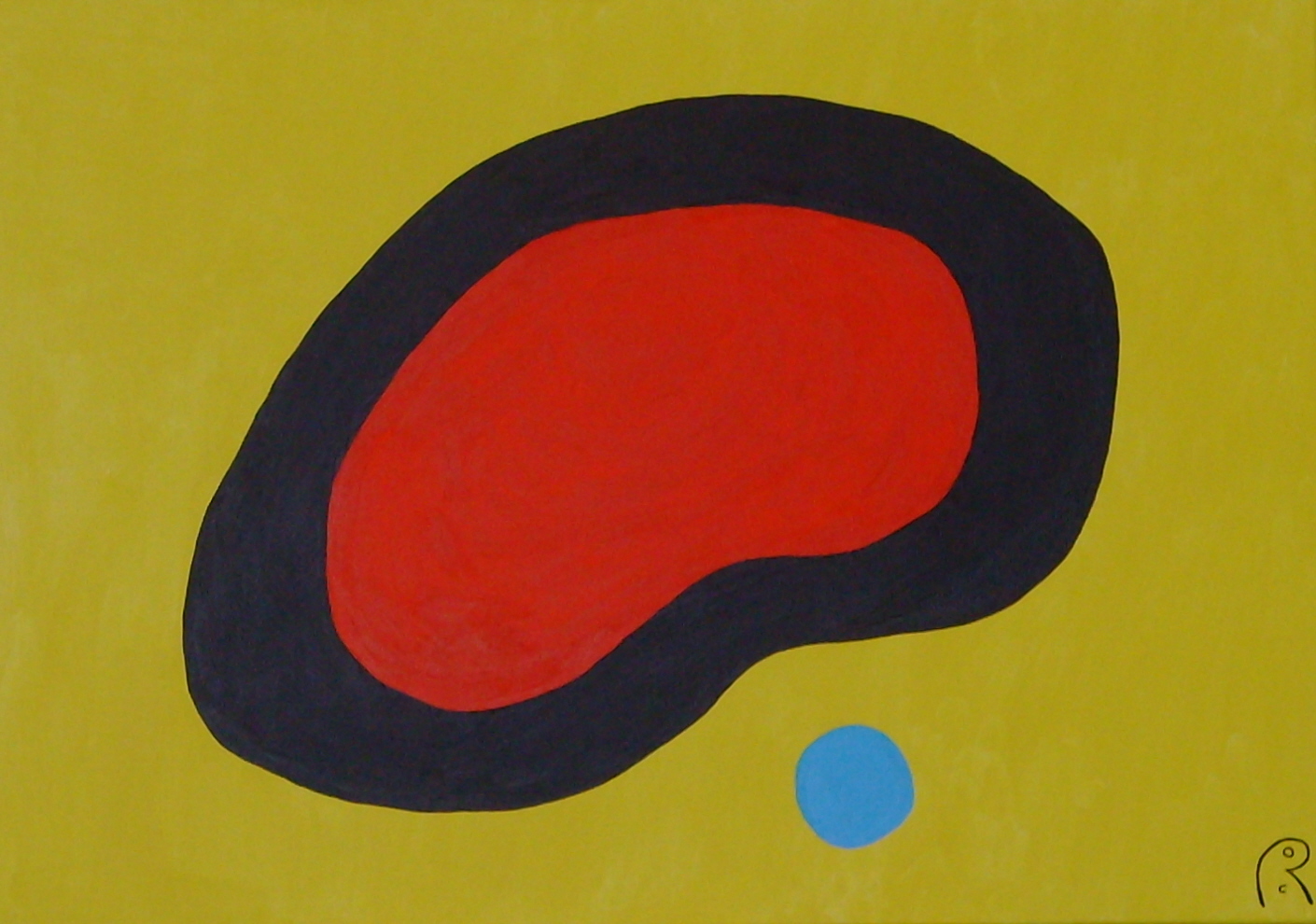
Compassion - Jan Theuninck, 2016 / 慈悲宪章 - 2016
The Antidote: Universal Compassion
To counter the danger of an ethics manufactured by state or political systems, Theuninck points back toward foundational human empathy. As detailed in his piece Compassion, cataloged on Kunstwerkt, he maintains that a healthy moral framework must transcend individual political groups or religious boundaries, prioritizing the baseline dignity of every person over the demands of an abstract system. https://charterforcompassion.org/arts/arts/international-reflective-writing.html/title/belgium
To counter the danger of an ethics manufactured by state or political systems, Theuninck points back toward foundational human empathy. As detailed in his piece Compassion, cataloged on Kunstwerkt, he maintains that a healthy moral framework must transcend individual political groups or religious boundaries, prioritizing the baseline dignity of every person over the demands of an abstract system. https://charterforcompassion.org/arts/arts/international-reflective-writing.html/title/belgium
-----------------------------------------------------------------------------------------------
The Charter for CompassionThe principle of compassion lies at the heart of all religious, ethical and spiritual traditions, calling us always to treat all others as we wish to be treated ourselves. Compassion impels us to work tirelessly to alleviate the suffering of our fellow creatures, to dethrone ourselves from the centre of our world and put another there, and to honour the inviolable sanctity of every single human being, treating everybody, without exception, with absolute justice, equity and respect.
It is also necessary in both public and private life to refrain consistently and empathically from inflicting pain. To act or speak violently out of spite, chauvinism, or self-interest, to impoverish, exploit or deny basic rights to anybody, and to incite hatred by denigrating others - even our enemies - is a denial of our common humanity. We acknowledge that we have failed to live compassionately and that some have even increased the sum of human misery in the name of religion.
We therefore call upon all men and women ~ to restore compassion to the centre of morality and religion ~ to return to the ancient principle that any interpretation of scripture that breeds violence, hatred or disdain is illegitimate ~ to ensure that youth are given accurate and respectful information about other traditions, religions and cultures ~ to encourage a positive appreciation of cultural and religious diversity ~ to cultivate an informed empathy with the suffering of all human beings, even those regarded as enemies.
We urgently need to make compassion a clear, luminous and dynamic force in our polarized world. Rooted in a principled determination to transcend selfishness, compassion can break down political, dogmatic, ideological and religious boundaries. Born of our deep interdependence, compassion is essential to human relationships and to a fulfilled humanity. It is the path to enlightenment, and indispensible to the creation of a just economy and a peaceful global compassion.
-------------------------------------
Des usages de la compassion (Le Monde Diplomatique, Décembre 2022)
https://www.monde-diplomatique.fr/2022/12/PIEILLER/65339
--------------------------------------------------------------------------------------------
-------------------------------------
https://web.archive.org/web/20230201165556/https://charterforcompassion.org/belgium
Des usages de la compassion (Le Monde Diplomatique, Décembre 2022)
https://www.monde-diplomatique.fr/2022/12/PIEILLER/65339
--------------------------------------------------------------------------------------------
Overview of the Painting "Compassion""Compassion" is an abstract painting created in 2016 by Belgian artist Jan Theuninck. It measures 70 x 100 cm and is executed in acrylic on canvas. Theuninck, born in 1954 in Zonnebeke, Belgium, is known for his minimalist and monochrome expressionist style, often addressing social and political themes such as pacifism, colonialism, and societal issues. His work draws influences from artists like Ellsworth Kelly and Joan Miró.Visual DescriptionThe painting features a bright yellow background with a central, irregular bean-shaped form outlined in thick black paint and filled with vibrant red. Positioned below and slightly to the right of this shape is a small, solid blue circle, evoking a sense of isolation or punctuation. The overall composition is simple and abstract, potentially symbolizing themes of emotion, suffering, or empathy through bold color contrasts and minimal elements. A small signature appears in the bottom right corner.Connection to the Charter for CompassionThe painting is directly inspired by and dedicated to the Charter for Compassion, an international initiative founded by Karen Armstrong in 2009. The Charter promotes compassion as a core principle across all religious, ethical, and spiritual traditions, urging people to treat others with justice, equity, and respect while working to alleviate suffering. The full text of the Charter, often quoted in descriptions of the painting, emphasizes restoring compassion to the center of morality and rejecting any interpretation of scripture that breeds violence, hatred, or disdain as illegitimate. This ties into the concept of "illegitimate violence," referring to acts or speech driven by spite, chauvinism, self-interest, exploitation, or incitement of hatred, which the Charter denounces as a denial of common humanity.Theuninck's pacifist leanings align with the Charter's call for empathy, cultural appreciation, and transcending boundaries to foster a peaceful global community. The artwork serves as a visual manifesto for these ideas, using abstraction to evoke reflection on human interdependence.
-------------------------------------
https://web.archive.org/web/20230201165556/https://charterforcompassion.org/belgium
Belgium
Jan Theuninck
(1954- )
Though born after World War II in 1954, Jan Theuninck finds himself writing about the war and its aftermath. A poet and minimalist painter with a strong interest in social and political issues, Theuninck writes under his own name as well as the pen-name, ORC, a name he uses in honor of Raoul Wallenberg. Although Dutch is his mother tongue, he often writes in French. His work frequently appears in poetry journals and magazines internationally.
Shoah
wandering jew, damned jew
and no words on them are forbidden
suspected of crimes and treason
they have been put in jail
they have been tortured and murdered
in the name of an insane idea
and now - more than ever -
who is next, please?
Shoa
juif errant , juif maudit
et nul mot sur eux est interdit
traités de crimes et de trahisons
et nul mot sur eux est interdit
traités de crimes et de trahisons
ils ont été mis en prison
on les a torturés et tués
au nom d’une infâme idée
et maintenant plus que jamais
a qui le tour s’il vous plaît ?
Yperiet
‘s avonds laat
vult een mist
Jde vallei
zonder te beseffen
verstikt hij ons
als een duistere macht
op de velden
liggen onze lijken
en onder het graseen bruine aarde.
Yperite
late at night
a mist
fills the valley.
without knowing
it suffocates
like a dark power.
on the fields
our dead bodies
and under the grass
a brown soil
Zuydcote
the sun shines
on the dune
the bunkers hide
the undesirable
all of them lose
their innocence
lost blood
on the beach
the sea...
guilty!
Auschwitz
burned in the oven
I perished in smoke
the remaining ashes
are deep grey
Red River
the train was too late
by foot it was too far
the river too nearby
the hatred too strong
bullets through your head
river of blood
red Danube
dead Budapest
This poem is about the elimination of approximately 20.000 Jews who fell victim to the fascist Arrow Cross militiamen in Budapest. Today artwork depicted in the wikipedia article is a monument to them: http://en.wikipedia.org/wiki/Shoes_on_the_Danube_Promenade. Text from the poem, Tyne Cot cut in the corten steel wall of the library in Zonnebeke, Belgium
© by Jan Theuninck
Tyne Cot
when you left
for the front
you were
living heroes
and now
you are on top
of the hill
where only
poppies
blow..........
Tyne Cot is the largest military cemetery of Commonwealth forces on the continent (WW1), the text is cut in the wall of the library in Zonnebeke, Belgium, a mile away from Tyne Cot : see photo at: http://en.wikipedia.org/wiki/Tyne_Cot
Hill 60
poppies blood
on the green grass
on the hills of mud
away they pass
© by Jan Theuninck
Polygon Wood
like a shrine
you lie
in the middle
of the wood
and warn
of those
who preach
peace
and make
war
© by Jan Theuninck
http://en.wikipedia.org/wiki/Battle_of_Polygon_Wood
------------------------------------------------------------------------------------------------------------------------
Frans Masereel
A pacifist in World War I, Frans Masereel, tried to make his art accessible to the ordinary man. His works were banned by the Nazis and widely distributed in Communist countries. But he rejected "political" art and party affiliation, condemning all enslavements, oppression, war and violence, injustice, and the power of money. We present here some of his many works and witnesses.
The painter and graphic artist Frans Masereel was born in the Belgian town of Blankenberghe in 1889. In 1896 he moved to Gent, where he began to study art at the "Ecole des Beaux-Arts" in the class of Jean Delvin at the age of 18. In 1909 he travelled to England and Germany, where he was inspired to create his first etchings and woodcuts.
From 1911 Frans Masereel settled in Paris for four years and then emigrated to Switzerland, where he worked as a graphic artist for various journals and magazines. His woodcut series, which were mainly of sociocritical content and of expressionistic formal concept, gave Frans Masereel international acclaim. Among them were his so-called image novels including "Passion eines Menschen", "Mein Stundenbuch", "Die Sonne", "Die Idee" and "Geschichte ohne Worte", which all date from around 1920. At that time Frans Masereel also drew illustrations for famous works of world literature by Thomas Mann, Emile Zola and Stefan Zwei.
In 1921 the artist returned to Paris, where he created his famous street scenes, the Montmartre paintings. From 1925 Frans Masereel lived near Boulogne-sur-Mer, where he painted predominantly coastal landscapes, harbor views and protraits of sailors and fishermen. During the 1930s the number of illustrated books and individual woodcuts decreased considerably.
In 1940 the artist fled from Paris and lived in several locations in Southern France. At the end of World War II, Frans Masereel was able to resume his artistic work, which had been lying idle for years. He created woodcuttings and paintings. From 1946 Masereel worked for several years as a teacher at the "Centre des Métiers d'Art" in Saarbrücken. In 1949 he moved to Nice. In the following years until 1968 numerous woodcut series appeared, which differed from his earlier "novels in images" as they were no longer based on a continuous narrative but on variations of a subject.
Source: http://www.fransmasereel.com/
Examples of Frans Masereel's Woodcuts
During the Great War, Frans Masereel joined in the fight to stop the war, a hopeless struggle, given the general fervour. Ink drawings and woodcuts were his instruments, and his engravings were brought together in collections Arise, You Dead and The Dead Speak which are unequivocal denunciations of the blood-letting. Masereel simplifies, brutalizes, contrasting black and white. He takes scenes and photographs from the newspapers and in a drawing style all of his own, he takes suffering to unbearable extremes. Or he uses a macabre and fantastic style with two headless bodies carrying their heads on a stretcher, one with a French képi and the other with a German helmet. It is madness everywhere, a madness against which Masereel knows he is powerless.
--------------------------------------------------------------------------------------------------------------------------
Émile VerhaerenEmile Verhaeren was a Belgian poet, art critic and wrote short stories and verse plays. He was born at St Amand lez-Pueres, NC Belgium on May 21st of 1855. He studied law at the University of Louvain and while there started a journal, La Semaine, which was suppressed by the authorities as well as the following work Le Type. He was admitted to the bar at Brussels in 1881 but soon began devoting his time to literature, writing in French. He was soon one of the leading figures of the Belgian literary renaissance. His poetry hovers between powerful sensuality, as in Les Flamandes (1883) and the harrowing despair of Les Debacles (1888). Among his most notable works are La Multiple Splendeur (1906) and the five-part Tout la Flandre (1904-11). Source: PoemHunter.com: http://www.poemhunter.com/emile-verhaeren/biography/ In this play the Belgian poet, Emile Verhaeren, has voiced his hopes for the regeneration of human society. The city of Oppidomagne is beseiged by a hostile army, and the revolutionists in both armies conspire and revolt. The gates of the city are thrown open, and the end of war declared. A captain in the hostile army is speaking over the body of Hérénian, leader of the revolutionists in the city. I was his disciple, and his unknown friend. His books were my Bible. It is men like this who give birth to men like me, faithful, long obscure, but whom fortune permits, in one overwhelming hour, to realize the supreme dream of their master. If fatherlands are fair, sweet to the heart, dear to the memory, armed nations on the frontiers are tragic and deadly; and the whole world is yet bristling with nations. It is in their teeth that we throw them this example of our concord. (Cheers.) They will understand some day the immortal thing accomplished here, in this illustrious Oppidomagne, whence the loftiest ideas of humanity have taken flight, one after another, through all the ages. For the first time since the beginning of power, since brains have reckoned time, two races, one renouncing its victory, the other its humbled pride, are made one in an embrace. The whole earth must needs have quivered, all the blood, all the sap of the earth must have flowed to the heart of things. Concord and good will have conquered hate. (Cheers.) Human strife, in its form of bloodshed, has been gainsaid. A new beacon shines on the horizon of future storms. Its steady rays shall dazzle all eyes, haunt all brains, magnetize all desires. Needs must we, after all these trials and sorrows, come at last into port, to whose entrance it points the way, and where it gilds the tranquil masts and vessels. | ||
The Cathedral of Rheims
|
Subscribe to:
Posts (Atom)